
Besides preparing for the next month's Indo-United State strategic dialogue in Washington, US Secretary of State Hillary Clinton will discuss a range of bilateral issues and Afghanistan with Indian leadership when she arrives in New Delhi next week.
The recent Pentagon report on Indo-United States military-to-military ties signifies America's commitment for strengthening relations with India, top US senators have said.
Ahead of the crucial Indo-United States strategic dialogue, the Obama administration has said that counter-terrorism cooperation with India is a "very high priority" for it as it would help prevent Mumbai-type attacks in future.
The second round of the Indo-United States strategic dialogue, co-chaired by External Affairs Minister S M Krishna and US Secretary of State Hillary Clinton, has been postponed in view of the Assembly elections in India and ongoing developments in West Asia and North Africa.
When she served in the United States Congress, Democrat Ellen Tauscher was one of the most vehement critics of the Indo-United States civilian nuclear deal.
The historic Indo-United States civilian nuclear agreement is on the right track, even as New Delhi has to complete a few formalities in this regard, said a top US diplomat. "It (nuke deal) is going very well, Senator. There are still a couple of steps that the Indians have to take to fully implement that agreement," Ambassador Robert Blake, the Obama nominee for the Assistant Secretary of State for South and Central Asia, said.

Ways to strengthen Indo-United States anti-terrorism cooperation and Pakistan's inaction against perpetrators of the Mumbai attacks are among the issues likely to figure prominently in talks Union Home Minister P Chidambaram will have with top American officials during his four-day US visit that began on Tuesday.
Leaders of the Left front, Bahujan Samaj Party, Telugu Desam Party and other parties on Tuesday met President Pratibha Patil to demand immediate convening of the monsoon session of Parliament, accusing the government of 'concealing' information regarding the Indo-United States nuclear deal.They charged the ruling coalition with subverting the Constitution by deciding to do away with the monsoon session and convening a combined session.
Instead of blaming politicians and parties, Indians must empower their elected representatives and bureaucracies to meet national challenges by making critical investments in leadership. One of the chief aims of Indian foreign policy is to establish the country as a great global power. It is no secret, though, that much of this battle must be won at home.
The Senate version of the bill of approval of the Indo-United States nuclear agreement was introduced on Wednesday in the House of Representatives, giving boost to efforts to push the agreement hours before a meeting between Prime Minister Manmohan Singh and President George W Bush in Washington.The bill was introduced by the Ranking Republican on the House Foreign Affairs Committee, Florida Congresswoman Ileana Ros-Lehtinen.

The Left, the United National Progressive Alliance and the Bahujan Samaj Party on Wednesday said that they will launch a nation-wide campaign against the United Progressive Alliance government on the Indo-United States nuclear deal, price rise and agrarian issues and described the trust vote win in Lok Sabha as 'immoral'.The campaign will be launched against price rise, inflation, agrarian crisis leading to farmers suicides, Karat said.
Prime Minister Manmohan Singh's meeting with United States President George W Bush later in September could be an opportunity to sign the 123 Agreement, US Ambassador David Mulford has said.Mulford added that he is optimistic about bipartisan support about the India-US civilian nuclear agreement. Speaking about China's role in the Nuclear Suppliers Group meeting on the India-specific waiver, Mulford said the communist country did the right thing in the end.
The wreckage is believed to be a Sea Hawk that crashed in the 1970s.
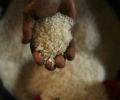
The government is likely to firm up next week a view on how to go about the food security bill. Indications to this effect were available on Wednesday with the government sources saying a decision will be taken only after Agriculture Minister Sharad Pawar's return from Rome where he has gone to attend Food and Agriculture Organisation conference.

The relations between the two countries have never been as good as they are now, Trump said, adding that the countries have made "wonderful deal".
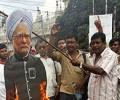
Bharatiya Janata Party leader Yashwant Sinha on Monday questioned Prime Minister Manmohan Singh over his decision to address an upcoming seminar on nuclear non-proliferation, claiming that he was now the head of a "lame duck" government who cannot make any policy decisions in view of the Model Code of Conduct which has come into force ahead of Lok Sabha polls.

Mumbai attack terrorist David Headley, who is currently in American custody, has been opposing his further interrogation by Indian investigators.

The Congress will take on the government in Parliament on the Indo-US nuclear deal

An outstanding student, the Politburo member has emerged as a leader with considerable skills of political negotiations.

'US-Indian relations will become an important part of Trump's diplomacy,' says Global Times.
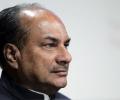
Indo-United States defence ties will not be impacted due to the issue relating to Indian diplomat Devayani Khobragade, Defence Minister AK Antony on Tuesday said.

Slated to be in India on December 8, Carter would travel to Japan, Bahrain, Israel, Italy and Great Britain before returning to the US on December 16. This is for the first time that an outgoing American Defence Secretary has included India in his itinerary for the final overseas trip.
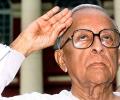
After being marginalised by the Trinamool Congress in West Bengal, the Left parties have appealed the prime minister to issue a commemorative stamp in the late leader's memory. Anita Katyal reports.

A strong partnership with US would deter China from making any aggressive posture against India, said Puneet Ahluwalia, a member of the Trump's Advisory Committee on Asian Americans.

There are many reasons for Japan to turn a deaf ear to its anti-nuclear lobby and concentrate on its geo-strategic imperatives to sign the nuclear deal with India, says Debalina Ghoshal.
